BlogJuly 28, 2026Designing AI people can trust with their money
What banking and payments work taught me about AI, security and consent 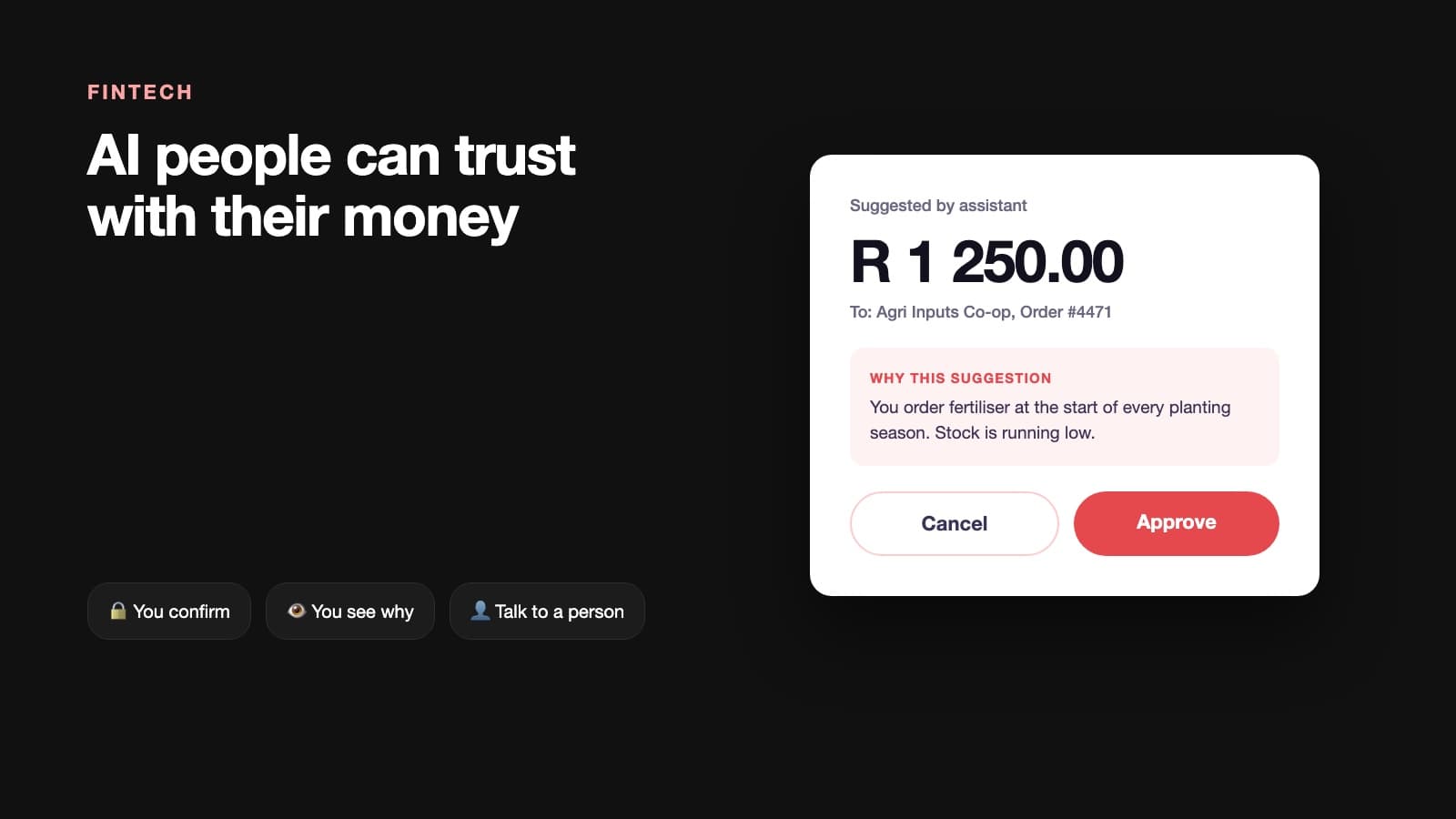
Show your reasons
In banking, you cannot simply decline someone's credit application without a reason. People have a right to understand decisions that affect their finances.
AI should be held to the same standard. If a system flags a transaction, recommends a loan amount or suggests what stock to order, it should say why in plain words. "We flagged this payment because it is much larger than your usual payments" is something a person can act on. "Risk score 0.82" is not.
Ask before you act
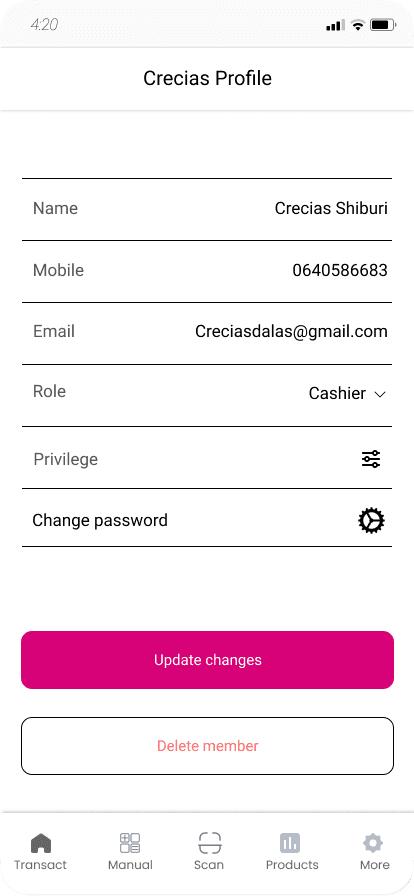
On MetaPOS, I designed role based access so a cashier could only do what the owner allowed. Every sensitive action had a clear owner.
AI agents that can take actions, like sending money, placing orders or changing settings, need the same structure. The safest pattern I have found is simple: the AI can prepare an action, but a person confirms it. The confirmation screen should show exactly what will happen, the amount, and who it is going to. One clear tap to approve, one clear tap to cancel.
Be careful with personal data
KYC work means handling ID numbers, addresses and financial history. I designed flows so people only shared what was needed, at the moment it was needed, and knew why they were being asked.
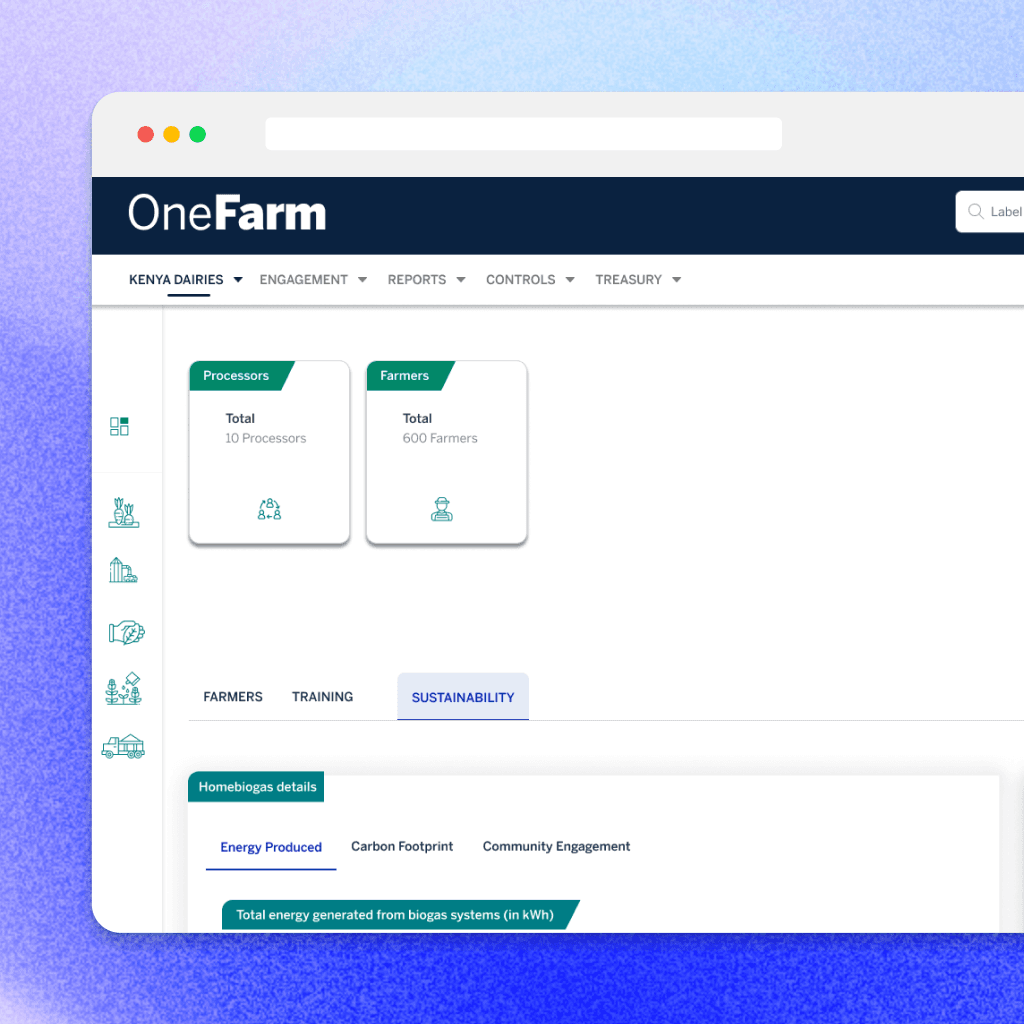
AI features often want as much data as possible, because more context gives better answers. But people should stay in control of what is shared. On OneFarm, farmers choose which partners can see their data, for example when they apply for financing. That kind of choice should be standard for AI features too. Tell people what the AI can see. Let them turn it off.
Meet people where they are
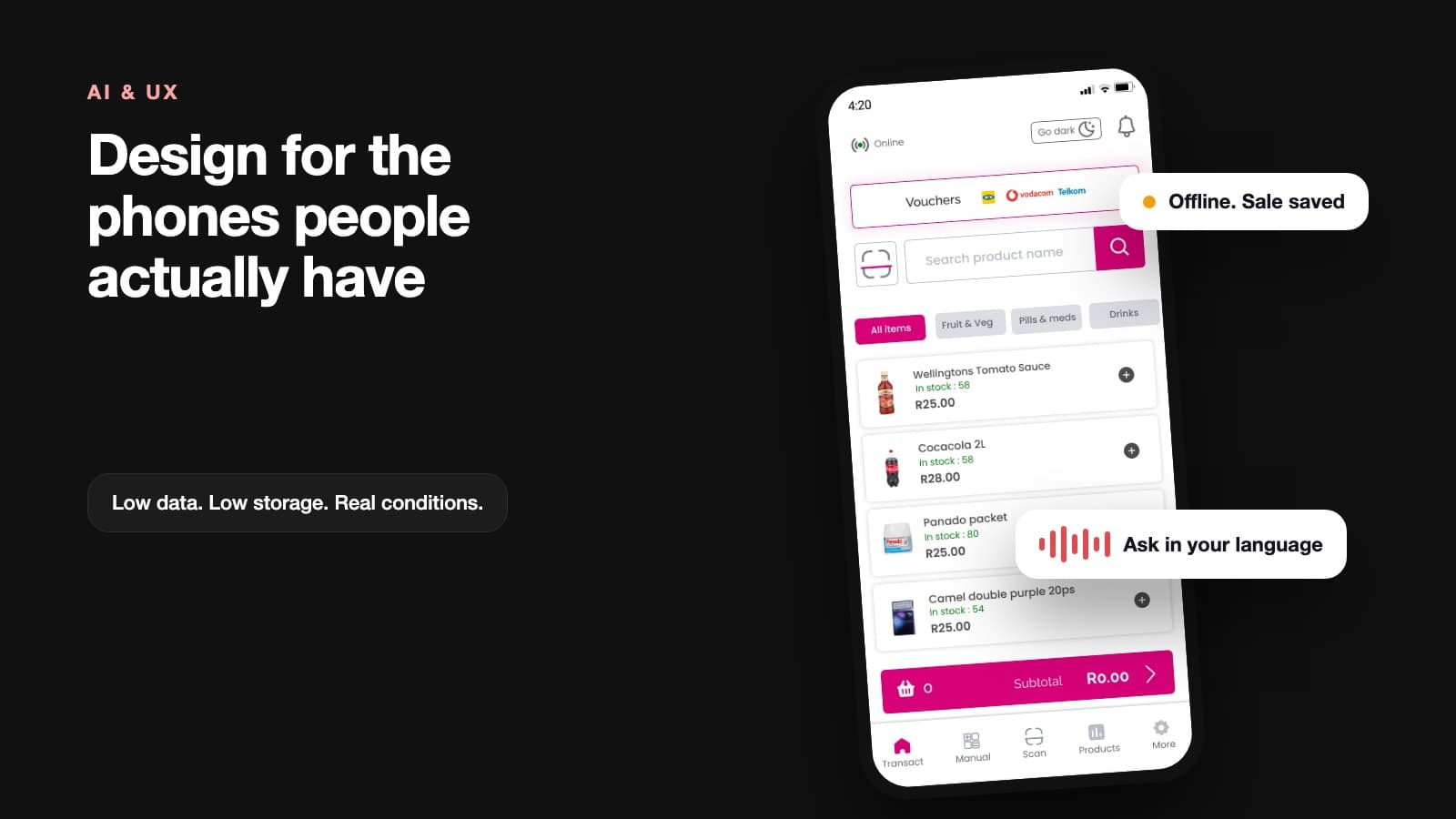
Not everyone uses a smartphone app. USSD and WhatsApp reach people with basic phones or little data. When I designed for these channels, every word counted. There was no room for long explanations.
AI assistants on WhatsApp and similar channels are a big opportunity in Africa. But a chat that sounds friendly and confident can also mislead someone more easily than a form. Clear language, short confirmations, and a simple way to reach a real person are essential, especially when money is involved.
A short checklist
Before I sign off on an AI feature in a financial product, I ask:
- Can the user see why the AI made this suggestion?
- Does a person confirm anything that moves money or shares personal data?
- Is it clear what data the AI uses, and can the user say no?
- Does the AI say when it is unsure?
- Is there an easy way to talk to a human?
None of these ideas are new. Banks have been building trust this way for a long time. AI just makes them more important, and they apply far beyond banking.